Aerodynamic efficiency is a key factor in cycling performance, especially for racers and long-distance triathletes.
The purpose of aerodynamic testing is to determine the optimal body position, which helps maximize both performance and comfort while minimizing air resistance, taking into account the trade-off among these three factors.
Aerodynamic efficiency is a key factor in cycling performance, especially for racers and long-distance triathletes.
The purpose of aerodynamic testing is to determine the optimal body position that maximizes both power output and comfort while minimizing air resistance, taking into account the trade-offs among these three factors.
Tests conducted on the track are more accurate than those conducted in open spaces; however, without track experience, it can be challenging to maintain the correct position during the measurement. As a result, there may be a significant difference between the positions adopted on the track and on public roads.
Weather conditions can affect measurement accuracy; it is recommended to take measurements in dry weather when wind speeds are low.
Advantages over the Velodrome:
• Road racing environment, similar to races held on asphalt
• The location can be flexible.
• No track rental fee
Disadvantages compared to the velodrome:
• Weather-dependent; accuracy decreases under unfavorable weather conditions
• It’s best to find a road free of traffic
• The measurement time may be slightly longer
My name is Zsombor Wermeser, and I’ve been cycling competitively since 2012. I’ve competed in both road and track cycling at the Paralympics (Tokyo 2020, Paris 2024). My best results are a 7th-place finish in the 4,000-meter track event and a 7th-place finish in the road time trial.
In addition to competing, I earned a BSc in Mechatronics and an MSc in Mechanical Engineering Modeling from the Budapest University of Technology and Economics (BME). I currently work as a researcher, focusing on the aero-servo-elastic optimization of flexible aircraft. I also participate in projects involving data analysis and machine learning algorithms. Drawing on the experience I’ve gained in elite sports and science, I strive to provide the highest-level guidance for this professional technical sport.
We will discuss the objectives and process of the test in advance.
On the day of the test, at the agreed-upon time and location, the first step is to equip the bicycle with the appropriate sensors. We finalize the test protocol and perform the initial installation procedures.
Then testing will begin. We can go through 3 or 4 test versions every hour, depending on the setup. We’ll discuss the conclusions after each run.
Once the test is complete, a report will be prepared that includes a detailed data analysis and evaluation. The report will be sent via email the day after the test.
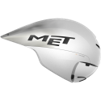
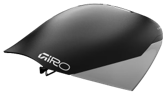
Time Trial Helmets:
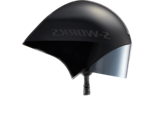
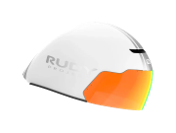
Kask Mistral M, Giro Aerohead 2 M, Specialized TT5 M, Met Widebody 2 L, Rudy Wingdream L
Road bike wheels:
Zipp 858 NSW front wheel (rim brake), Zipp Super 9 rear complete wheel (rim brake), DT Swiss 1100 DiCut wheelset (disc brake)
Adaptive elbow supports and clothing accessories are also available for trial by individual appointment.
On-road test:
35,000 Ft per hour + call-out fee
Velodrome Test:
35,000 Ft per hour + travel fee + discounted track rental fee
A testing period of 2 or 3 hours is recommended. Longer sessions are difficult to endure due to fatigue. The call-out fee depends on the location.
A difference of 10–30 W can easily be observed between the end and start positions. The “power savings” depend on speed; the higher the speed, the greater the savings.
To take a test, you must accept the privacy and data protection agreement, as well as the terms of use and requirements for the track (if the measurement is taken at a velodrome).
András Zsombor Wermeser
14 Pauler Street, Budapest 2145
90849385-1-41